Lifestyle

I Cancelled Every Subscription for 30 Days

A survival story in four acts: panic, discovery, unexpected peace, and the very selective return to reality. No subscriptions were permanently harmed in this experiment. My ego, however, took a beating.

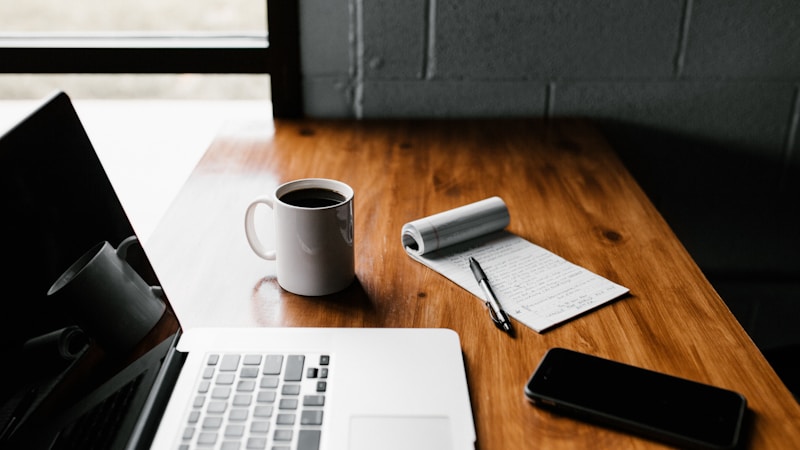
Track What You Actually Need Journal and coffee on a wooden desk, representing a fresh start and intentional living

The Setup: 14 Subscriptions and a Crisis of Conscience

It started with a credit card statement. One of those moments where you open the app expecting to see a reasonable number and instead see something that makes you do the "lean back and exhale through your nose" move. I was spending $237 per month on subscriptions. Two hundred and thirty-seven dollars. Every single month. On autopilot.

So I did what any reasonable person with a flair for the dramatic would do: I cancelled everything. All 14 subscriptions. Netflix, Spotify, iCloud, ChatGPT Plus, Adobe Creative Cloud, Notion, a VPN I forgot the name of, a meditation app I used exactly twice, a language learning app (because the version of me who speaks Portuguese apparently only exists in January), two news subscriptions, a cloud backup service, and a meal kit delivery that I'd been meaning to cancel since the Great Chicken Teriyaki Disaster of November.

The total damage before the experiment: $237/month, or $2,844 per year. That's a vacation. A really nice vacation. To a place with beaches and those drinks that come with little umbrellas.

What follows is an honest, week-by-week account of what happened when I went completely subscription-free for 30 days. Spoiler alert: I survived. But there were some rough patches.
14

subscriptions cancelled on Day 1

$237

monthly spending before the experiment

5

subscriptions re-subscribed after 30 days

$89

new monthly total (63% savings)

Week 1: The Panic Phase

Day 1 - Monday

Cancelled everything before I could talk myself out of it. The process took 47 minutes, which is honestly criminal. Some services required clicking through five pages of "Are you SURE?" and "But look at what you'll LOSE" screens. One service tried to offer me a 50% discount. Another showed me a sad cartoon dog. I powered through, but I won't pretend I didn't hesitate at the sad dog.

Day 2 - Tuesday

Reached for Netflix after dinner and remembered. Stared at my TV like it had betrayed me. Ended up watching free content on YouTube. Discovered that YouTube without Premium means ads every four minutes. Contemplated my life choices during a 15-second unskippable ad for a mattress I will never buy.

Day 3 - Wednesday

The Spotify withdrawal hit hard. Tried listening to music on YouTube (more ads). Downloaded a free music app that had approximately 400 songs, none of which I wanted to hear. Found myself humming songs I couldn't listen to. My coworker asked if I was okay. I was not okay.

Day 5 - Friday

Needed to edit a photo for work. Without Adobe, I tried GIMP. GIMP's interface looks like it was designed by someone who hates joy. After 20 minutes of Googling "GIMP how to crop," I successfully edited the photo. It took 4x longer than Photoshop, but it cost exactly $0.00 and my dignity was the only casualty.

Day 7 - Sunday

End of week one assessment: I have missed Spotify approximately 47 times. I have missed Netflix twice. I have not once missed the meditation app, the language app, or the meal kit service. This is already telling me something I didn't want to know.

Week 2: The Discovery Phase

Something shifted in week two. The panic faded and was replaced by a kind of adventurous curiosity. It turns out that when you can't default to paid services, you start discovering a whole ecosystem of free alternatives that are genuinely good.

The Free Alternatives That Actually Worked

Music: I rediscovered my local library's free access to Hoopla, which has a surprisingly good music selection. Also: I own 847 songs in my iTunes library from the 2000s that I'd completely forgotten about. Some of them are genuinely great. Some of them are Fall Out Boy deep cuts, which is also genuinely great.

Video: Tubi, Pluto TV, and Kanopy (free with a library card) provided more content than I could watch in a month. Not the latest releases, but perfectly good entertainment. I also visited my actual local library and borrowed DVDs like some kind of time traveler from 2008.

Cloud Storage: I was using 7GB of iCloud. The free tier is 5GB. I spent an hour cleaning up old photos and got under 5GB. The paid tier was solving a problem that basic file hygiene could have solved for free.

Note-taking: Apple Notes exists. It's free. It's already on my phone. It does 90% of what Notion does for my personal use. I felt slightly ridiculous for paying $10/month for fancy databases when I was mostly making grocery lists.

Clean desk with minimal setup, representing a simplified digital life

Week 3: The Surprising Peace

I didn't expect this. Somewhere around day 15, I stopped thinking about what I was missing and started noticing what I'd gained. Without the constant background hum of "you should be using this service you're paying for," my brain felt quieter.

No more guilt about not using the meditation app I was paying for. No more pressure to watch something on Netflix to "get my money's worth." No more language lesson notifications making me feel like a failure in two languages. The mental overhead of managing 14 subscriptions is invisible until it's gone. Then you realize it was like a low-grade headache you'd gotten so used to that you forgot it was there.

I also noticed I was reading more. Without infinite streaming content competing for my evening hours, I picked up actual books. Physical ones, from the library. I read three novels in week three. The last time I read three novels in a week was a beach vacation in 2019. It turns out that when you remove unlimited entertainment options, you don't sit in a dark room staring at the wall. You just do different things.

The financial clarity was also weirdly calming. My credit card statement was short and comprehensible. Every charge was something I'd actively chosen to spend money on. No surprises. No "wait, what's that $14.99 charge?" moments. Just... simplicity.

This is what digital minimalism advocates talk about, and I'd always dismissed them as insufferable. Turns out they're insufferable and right.

Week 4: The Selective Return

Day 30 arrived. The experiment was over. I could re-subscribe to anything I wanted. But the list of things I actually wanted had gotten very short. Out of 14 original subscriptions, I re-subscribed to exactly 5.

Re-subscribed (5 services)

  • Spotify Premium - I missed this daily. No substitute came close. $11.99/mo.
  • iCloud 50GB - Need it for phone backups and shared family photos. $0.99/mo.
  • ChatGPT Plus - Genuinely use this for work every day. $20/mo.
  • One streaming service (Netflix) - For evenings, but I'll rotate quarterly. $15.49/mo.
  • Cloud backup - Peace of mind for irreplaceable files. $6/mo.

New total: $54.47/month

Did Not Miss (9 services)

  • Adobe Creative Cloud - Used GIMP and Canva free. Good enough. Saved $55/mo.
  • Notion - Apple Notes covers my needs. Saved $10/mo.
  • VPN - I used it twice in 6 months. Saved $13/mo.
  • Meditation app - Free YouTube meditations are fine. Saved $15/mo.
  • Language app - Let's be honest, this was aspirational. Saved $14/mo.
  • Two news subscriptions - Library provides free digital access. Saved $28/mo.
  • Second streaming service - One is plenty. Saved $16/mo.
  • Meal kit delivery - I can Google recipes. Saved $32/mo.

Monthly savings: $183

The math is staggering. I went from $237/month to $54.47/month. That's $2,190 per year back in my pocket. I could go on that vacation now. The one with the beaches and the little umbrella drinks. Twice.

The most uncomfortable realization? Nine of my fourteen subscriptions were essentially decorative. They existed on my credit card statement as proof of the person I wanted to be, not the person I actually was. The meditation app didn't make me calm. The language app didn't make me bilingual. The meal kit didn't make me a chef. They made me $183/month poorer and vaguely guilty. That's it.

What I Learned (The Uncomfortable Version)

1. You Don't Need as Many Subscriptions as You Think

I thought I'd be miserable without my 14 services. I was uncomfortable for about five days. Then I was fine. Then I was better than fine. The hardest part of cancelling is the anticipation, not the reality.

2. Free Alternatives Are Better Than You Expect

We assume paid services are always superior. For professional-grade work, that's often true. For personal use? Free alternatives have gotten remarkably good. Your local library card alone replaces several hundred dollars of annual subscriptions.

3. Subscription Guilt Is a Real Tax on Your Mental Health

Every unused subscription is a tiny, recurring reminder that you're not living up to your own expectations. Cancelling unused services isn't just about money. It's about removing self-imposed guilt from your life. I didn't realize how much mental space my unused subscriptions were occupying until they were gone.

4. The "I Might Need It Someday" Argument Is Almost Always Wrong

Of the 9 services I cancelled, I needed exactly zero of them during the 30 days. And re-subscribing takes about 90 seconds. The fear of needing something after cancelling is dramatically worse than the minor inconvenience of re-subscribing if you actually need it. Use Subcut to track what you keep so you always know where you stand.

Frequently Asked Questions

What happens when you cancel all your subscriptions at once?

You experience an initial period of mild panic as you lose access to familiar services. Within the first week, you discover free alternatives for many services you were paying for. By week two to three, most people report feeling surprisingly unburdened and more intentional about their digital consumption. The key insight most people discover is that they genuinely miss only 3 to 5 services out of their original 10 to 15 subscriptions.

How much money can you save by cancelling all subscriptions for a month?

The average person saves between $150 and $250 by cancelling all subscriptions for one month, based on the average American subscription spending of $219 per month. The more valuable outcome is the clarity gained about which subscriptions you actually need. Most people who do a full subscription reset end up re-subscribing to only 30 to 40 percent of their original services, saving $80 to $150 per month permanently.

Will I lose my data if I cancel all my subscriptions?

Most subscription services preserve your data for 30 to 90 days after cancellation. Spotify keeps your playlists indefinitely. Netflix preserves your profile and watch history. Cloud storage services like iCloud and Google One typically give you a grace period to download files before reducing your storage. Before cancelling, check each service's data retention policy and download anything critical.

What are the hardest subscriptions to live without?

Based on surveys and personal experiments, the hardest subscriptions to live without are music streaming (Spotify or Apple Music), cloud storage (iCloud or Google One), and one primary video streaming service. Password managers and communication tools also rank high. The subscriptions people miss least tend to be secondary streaming services, premium app tiers, news paywalls, and subscription boxes.

Should I cancel everything or do a gradual subscription audit?

Both approaches work, but they serve different personalities. The cold-turkey approach provides maximum clarity because you discover what you genuinely miss versus what you just habitually used. The gradual approach works better for people who rely on subscriptions for work or have shared family plans. If you are unsure, try a gradual approach by cancelling one subscription per week for a month, starting with the ones you use least.

Ready for Your Own Subscription Reset?

Before you cancel everything, see everything. Subcut shows you every subscription in one place so you can make informed decisions about what stays and what goes.

Download Subcut Free

Related Reading