Psychology & Behavior

Subscription FOMO: Why You Can't Stop Adding "Just One More"

You swore you were done subscribing to things. Then someone on TikTok mentioned an app and now you're entering your credit card number at 11pm. Let's talk about why this keeps happening.

Track Your Subscriptions Free Person scrolling through phone late at night, surrounded by app notifications

The Moment It Happens

It starts innocently enough. A coworker mentions they've been using this amazing meditation app. Your favorite podcast host casually drops a promo code. Someone on Reddit posts a screenshot of a productivity tool that looks life-changing. And then, like clockwork, the little voice in your head whispers: "What if I'm the only one not using this?"

That whisper has a name: subscription FOMO. And it's responsible for billions of dollars in recurring charges that people didn't really need, don't regularly use, and definitely didn't budget for.

The subscription economy has grown to over $275 billion globally in 2026, and a meaningful chunk of that revenue comes not from people who genuinely need services, but from people who were scared of being left out. The fear of missing out isn't new. Humans have been anxious about what the neighbors are doing since we lived in caves. But subscription companies have turned FOMO into a precision science, and your credit card is the lab rat.

Here's the thing: understanding why you keep subscribing is the first step toward stopping. So let's dissect the psychology, call out the tricks, and figure out how to subscribe intentionally instead of impulsively. Your bank account will thank you.

42%

of consumers have forgotten about at least one active subscription

2.5x

how much people underestimate their total subscription spending

$133/yr

average wasted on subscriptions people don't actively use

The Four Horsemen of Subscription FOMO

Subscription FOMO isn't just one feeling. It's a cocktail of psychological biases that companies have learned to exploit with surgical precision. Understanding each one is like getting the cheat codes to your own brain.

1. Social Proof: "Everyone Else Has It"

Humans are social creatures. When we see other people using a product, our brains interpret it as evidence that the product is good. This is social proof, and it's the oldest trick in marketing. But in the subscription era, social proof has gone nuclear.

Think about how many subscription recommendations you encounter daily. Your Instagram feed shows someone's Notion setup. A YouTube creator mentions their VPN sponsor. A group chat buzzes about the latest AI tool. Each mention is a tiny vote of confidence that your brain tallies up until not subscribing feels like the weird choice.

The sneaky part is that most of these "recommendations" are paid sponsorships or affiliate deals. That YouTuber raving about a password manager? They're getting $50 per signup. The line between genuine recommendation and paid advertisement has been blurred to the point of invisibility. Your FOMO is, quite literally, sponsored content.

2. Scarcity and Urgency: "This Deal Expires in 2 Hours"

Nothing triggers FOMO quite like a countdown timer. "50% off, but only for the next 24 hours." "Lock in this price before it increases." "Limited spots available." These urgency tactics bypass your rational brain and activate the same fight-or-flight response that once helped your ancestors grab the last antelope before the other tribe showed up.

Here's the secret the subscription industry doesn't want you to know: the deal almost never actually expires. That "limited time" introductory price? It'll be back next month under a different promotion. Those "limited spots"? The software is digital. There are infinite spots. The countdown timer is theater, designed to make you act before you think.

A study by the Journal of Consumer Research found that artificial scarcity increases purchase likelihood by up to 226%. When applied to subscriptions, this means people aren't just buying once in a panic; they're committing to recurring payments because a fake clock made them anxious. That's an expensive alarm.

3. The Endowment Effect: "But I Already Started the Free Trial"

Free trials are the gateway drug of subscription FOMO. You sign up thinking, "I'll just try it and cancel before I'm charged." But something psychologically sneaky happens during that trial period: you start feeling like the service is already yours.

This is the endowment effect. Once we feel ownership over something, we value it more than we would if we were evaluating it from scratch. After seven days of using a fancy note-taking app, canceling doesn't feel like "not buying something." It feels like losing something. And loss aversion means losses hurt about twice as much as equivalent gains feel good.

Companies know this. That's why free trials exist. Not because companies are generous, but because they've calculated that the endowment effect will convert a massive percentage of trial users into paying subscribers who then stick around for months out of inertia.

4. Identity FOMO: "This Is Who I Want to Be"

This is the subtlest and most powerful form of subscription FOMO. Many subscriptions aren't really about the service. They're about the person you imagine yourself becoming if you had the service. The meditation app isn't just an app; it's the calm, centered version of you. The language-learning subscription isn't just lessons; it's the worldly, multilingual future you.

The problem is that subscribing to the tool isn't the same as doing the work. Signing up for Duolingo doesn't make you bilingual. Subscribing to a fitness app doesn't make you fit. But the act of subscribing gives you a tiny dopamine hit of "I'm investing in myself," which temporarily satisfies the same psychological need that actually using the service would satisfy.

This is why subscription Stockholm syndrome is so common. You're not defending the service. You're defending the aspirational version of yourself that the subscription represents. Canceling isn't just losing an app. It's admitting that you didn't become that person. Ouch.
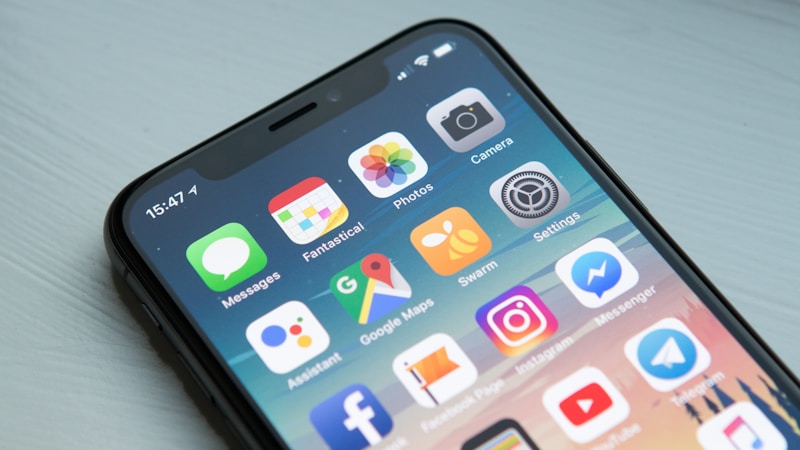
Social Media: The FOMO Amplifier

Social media didn't invent FOMO, but it put it on steroids and gave it a megaphone. Before the internet, your exposure to other people's choices was limited to your immediate social circle. Now, you can see what millions of strangers are subscribing to, using, and recommending, all before breakfast.

The "what's in my phone" and "apps I can't live without" genre of content is specifically designed to make you feel like your current app setup is inadequate. When an influencer with a perfectly organized digital life shows you the fifteen apps that "changed everything," your brain doesn't process it as one person's opinion. It processes it as evidence that you're behind.

Then there's the subscription-as-status phenomenon. In 2026, your subscriptions say something about you, or at least people think they do. Having the right AI tool, the right productivity app, the right streaming service is a form of digital signaling. It's the modern equivalent of wearing the right brand of jeans, except it costs $9.99/month forever instead of $60 once.

Person surrounded by notification bubbles and app icons representing subscription overload

The research backs this up. A 2025 Deloitte survey found that 38% of Gen Z and Millennial subscribers cited "seeing it recommended online" as their primary reason for subscribing to a new service, ahead of personal need (29%) and price (22%). We're literally subscribing to things because the internet told us to. If that doesn't qualify as subscription fatigue waiting to happen, nothing does.

How to Break the Subscription FOMO Cycle

Knowing the psychology is half the battle. The other half is building systems that protect you from your own impulses. Here are six strategies that actually work.

The 72-Hour Rule

When you feel the urge to subscribe to something new, write it down and wait 72 hours. Don't sign up. Don't start a free trial. Just write it on a list. After three days, check the list. You'll find that at least half the items no longer seem urgent or interesting. The FOMO fades surprisingly fast when you don't feed it.

Calculate the Annual Cost

$4.99/month sounds trivial. $59.88/year sounds like a decision. Always multiply the monthly price by 12 before subscribing. Then ask yourself: would I hand someone $60 cash right now for this? If the answer is no, you don't actually want the service. You want the feeling of subscribing.

One In, One Out

Set a hard subscription cap. If you want to add a new service, you have to cancel an existing one first. This forces a direct comparison: is this new thing more valuable than what I already have? Usually, the answer is no, and the FOMO dissolves once you frame it as a trade-off rather than an addition.

Unfollow the Triggers

If "tech setup" content consistently makes you want to subscribe to things, unfollow or mute those creators. This isn't about being anti-technology. It's about recognizing that curated content is designed to make you feel inadequate so you'll buy things. Removing the trigger is more effective than relying on willpower.

Use a Subscription Tracker

FOMO thrives in the dark. When you can't see all your subscriptions in one place, adding "just one more" feels harmless. But when you open Subcut and see that you're already paying for 14 services totaling $187/month, that fifteenth subscription suddenly looks a lot less appealing.

Research Free Alternatives First

Before subscribing to any paid service, spend 10 minutes searching for free alternatives. You'll be surprised how often a free tool does 80% of what the paid version does. The premium features driving your FOMO are often features you'll never actually use. "But what if I need it someday" is FOMO wearing a trench coat and fake mustache.

The Subscription FOMO Test

Before you subscribe to anything new, run it through these five questions. If you can't answer "yes" to at least three, your FOMO is doing the shopping, not your brain.

01

Do I have a specific, recurring use case? Not "I might use it someday" but "I will use this for X every week."

02

Have I checked for free alternatives? Spending 10 minutes searching could save you $120/year.

03

Am I subscribing because of a recommendation, or because of my actual needs? If a YouTuber is the reason, pause.

04

Would I pay the annual cost upfront right now? If $120 cash feels too much, $10/month is the same thing in disguise.

05

Is this replacing something I already pay for, or adding to the pile? Addition without subtraction is how subscription creep starts.

Frequently Asked Questions

What is subscription FOMO?

Subscription FOMO is the fear of missing out that drives people to sign up for recurring services they may not need. It is triggered by social media influence, limited-time pricing offers, free trial conversions, and the perception that everyone else is using a particular service. Unlike regular FOMO, subscription FOMO creates ongoing financial commitments that persist long after the initial impulse fades.

How much money does FOMO-driven subscribing cost the average person?

Studies suggest the average person spends between $50 and $100 per month on subscriptions they signed up for impulsively and rarely use. A 2025 C+R Research survey found that 42 percent of consumers have forgotten about at least one active subscription, and the average American underestimates their total subscription spending by more than 2.5 times. Over a year, FOMO-driven subscriptions can cost $600 to $1,200 in wasted spending.

Why do free trials trigger subscription FOMO?

Free trials exploit the endowment effect, a cognitive bias where people value things more once they feel ownership over them. After using a service for 7 or 14 days, canceling feels like losing something rather than simply not buying something. Companies know that 60 to 80 percent of people who start free trials forget or choose not to cancel, converting them into paying subscribers through inertia rather than genuine value.

How can I stop subscribing to things I don't need?

Implement a 72-hour rule where you wait three full days before subscribing to anything new. During those 72 hours, research free alternatives, check if you already have a similar service, and calculate the annual cost rather than the monthly price. Set a firm monthly subscription budget and enforce a one-in-one-out policy. Use a subscription tracker like Subcut to maintain visibility over everything you are paying for so new additions cannot hide in the noise.

Is subscription FOMO a real psychological phenomenon?

Yes. FOMO in general is well-documented in psychology research, and its application to subscription services is a recognized pattern in consumer behavior studies. It draws on established psychological principles including social proof, loss aversion, the endowment effect, and scarcity bias. Marketing teams at subscription companies actively design their acquisition funnels to exploit these biases, making subscription FOMO not just real but deliberately engineered.

Stop FOMO From Running Your Wallet

Subcut gives you total visibility over every subscription you pay for. When you can see the full picture, FOMO loses its power and intentional decisions take over.

Download Subcut Free

Related Reading